Home
Home
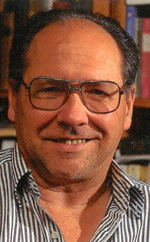
Alan Haig-Brown of New Westminster was born in 1941 in Campbell River. He seined salmon and herring until 1973, and served for eleven years as coordinator of First Nations education in the Cariboo-Chilcotin. He also taught school to Indigenous students on Quadra Island and the Cariboo. Haig-Brown became editor of the West Coast Fisherman in 1986 and later founded The West Coast Mariner and The West Coast Logger. Alan Haig-Brown photographs and writes about commercial boats and their crews, from tugs to fishing, for a wide variety of magazines including Professional Mariner magazine. He also supported a global travel habit by doing some writing for a marine engine manufacturer.
His chronicle of one ship in the commercial fishing industry since 1926 is The Suzie A (Pacific Educational, 1991). His award-winning books for Harbour Publishing include Fishing for a Living (1993) and The Fraser River (1996). He also wrote Canada is Hell No We Won't Go: Vietnam Drafter Resisters in Canada (Raincoast, 1996) which includes profiles of several writers such as environmentalist Paul George, poet Norm Sibum, singer Jim Byrnes, Stephen Eaton Hume and Fred Reed.
He is the son of Roderick Haig-Brown [see entry].
Review of the author's work by BC Studies:
The Fraser River
Still Fishin': The BC Fishing Industry Revisited
***
Raincoast Chronicles 25: m̓am̓aɫa Goes Fishing
by Alan Haig-Brown
(Harbour $24.95)
Review by Graham Chandler (BCBW 2025)
If you’ve ever wondered what a particular job would be like, what’s the best way to find out? Most people would say, why just get down, get your hands dirty and do it, do it. There’s always so much more to be learned “on the job” than just watching or reading about it can reveal. Unless you’re reading someone who got down and did it—for well over a decade, then wrote about what it was like. But there’s a catch with that approach—the inherent problem of becoming a boring read. Which won’t happen if it’s experienced and written by an author with the talents and reputation of Alan Haig-Brown. Then you won’t be able to put it down.
In Raincoast Chronicles 25: m̓am̓aɫa Goes Fishing, Haig-Brown writes that in 1960 he was living in Campbell River, an 18-year-old newlywed high school dropout facing meagre employment prospects. But he was more fortunate than many in such circumstances: his wife’s father, Herb Assu, was a talented and successful fisher whose family owned a seine boat. You can probably guess how this story begins now, especially when you read what Haig-Brown says of his immense respect for Herb. “He was…the man who informed so much of my formative years between 1960 and 1973,” he writes. “Herb was both my skipper and my father-in-law. The two roles were inseparable, and the latter explained the former. Just as I became a part of the family, I became part of the crew on the family boat.”
And thus begins this brilliant memoir, with a twist: The family to which Haig-Brown refers is part of the We Wai Kai Nation on Quadra Island. And Haig-Brown, with an American mother and British father (the award-winning writer of 28 books, Roderick Haig-Brown) was “m̓am̓aɫa”—or “white guy”. Cultural understandings, and occasional misunderstandings, provide ample fodder for some entertaining reading.
The volume boasts a plethora of great black and white photographs from the early 1960s and 70s, a large number of which were shot by Haig-Brown’s then-wife, Vicki. These add tremendous value to the book as a source of history of the early Canadian west coast commercial fisheries, as Haig-Brown’s vividly detailed descriptions of activity and processes contain references to the terminology shown in those well-produced original shots chosen for the book. Just look on pages adjacent to the text and you quickly understand a sequence.
Along the way, Haig-Brown’s writing reflects an early infectious enthusiasm for the life of a west coast fisher—bolstered by an oft-typical sense of adventure felt by an excited teenager on their first full-time job. He learned fast and soon adapted to the unique rhythm and challenges of the fishers’ life. “When you spend months on a small boat with a half-dozen or so other people, you get along or get off. Everyone has their job, and they do it or leave.” But, he writes, not all was work. “In the 1960s, fishing was in some ways a gentler profession.” For example, he talks of taking time to anchor offshore and climb a hill to pick huckleberries, and “Mitzi [Alan’s mother-in-law] would make huckleberry pies” to go along with her delicious salmon stews.
The level of detail he employs when describing a particular process like seining is nothing short of amazing—considering that he’s talking about something he was learning upwards of 60 years ago. Clearly his enthusiasm hasn’t faded; it’s still contagious. Along the way we learn some of the terminology of the industry and new words like “fish peugh,” “brailing,” “hand bombing,” “zine,” “monkey fist” and “bunt.”
Taking in the BC coast from up north for pink salmon to the south for herring and everything in between, Haig-Brown recounts more than the physical lifestyle. On a week-long December trip to the Port Edward cannery near Prince Rupert, “I learned something about navigating a boat in the dark and snow without radar, but I also learned of the racism that the BC fishery was built on and the deep-seated anger that my fellow crew carried as a result.” He is referring to his admiration of the good-looking salmon seiners built by the Haida people. And he soon learned that, due to debt incurred in their building, these boats were taken away from their owners by the company. Sixty years later this is still a cause of pain and anger for the Haida people, he says.
Haig-Brown writes glowingly of his father-in-law, Herb—who is featured throughout the book. “He was my professor of the waters and of life,” he writes. “For some of my commercial fishing years, I also attended university. The learning on the boat was a slow, immersive process, while university was an intense rush of lectures and undigested information. Like a slow-cooked roast, the boat learning was rich in flavour and nutrition. The university, with its diverse lectures and specialized faculties, was more like a cafeteria meal served on a segmented plastic plate.” 9781998526185
Vancouver-based writer Graham Chandler has several hundred published stories to his credit and prefers those—like this review—in which much is learned along the way.
BOOKS:
The Suzie A (Pacific Educational, 1991)
Fishing for a Living (Harbour, 1993)
The Fraser River (Harbour, 1996) $49.95
Still Fishin': The BC Fishing Industry Revisited (Harbour, 2010) $26.95
Random Walks: New West From the Street (Image West, 2022) $29.95 9780994817525
[BCBW 2023] "Fishing"
His chronicle of one ship in the commercial fishing industry since 1926 is The Suzie A (Pacific Educational, 1991). His award-winning books for Harbour Publishing include Fishing for a Living (1993) and The Fraser River (1996). He also wrote Canada is Hell No We Won't Go: Vietnam Drafter Resisters in Canada (Raincoast, 1996) which includes profiles of several writers such as environmentalist Paul George, poet Norm Sibum, singer Jim Byrnes, Stephen Eaton Hume and Fred Reed.
He is the son of Roderick Haig-Brown [see entry].
Review of the author's work by BC Studies:
The Fraser River
Still Fishin': The BC Fishing Industry Revisited
***
Raincoast Chronicles 25: m̓am̓aɫa Goes Fishing
by Alan Haig-Brown
(Harbour $24.95)
Review by Graham Chandler (BCBW 2025)
If you’ve ever wondered what a particular job would be like, what’s the best way to find out? Most people would say, why just get down, get your hands dirty and do it, do it. There’s always so much more to be learned “on the job” than just watching or reading about it can reveal. Unless you’re reading someone who got down and did it—for well over a decade, then wrote about what it was like. But there’s a catch with that approach—the inherent problem of becoming a boring read. Which won’t happen if it’s experienced and written by an author with the talents and reputation of Alan Haig-Brown. Then you won’t be able to put it down.
In Raincoast Chronicles 25: m̓am̓aɫa Goes Fishing, Haig-Brown writes that in 1960 he was living in Campbell River, an 18-year-old newlywed high school dropout facing meagre employment prospects. But he was more fortunate than many in such circumstances: his wife’s father, Herb Assu, was a talented and successful fisher whose family owned a seine boat. You can probably guess how this story begins now, especially when you read what Haig-Brown says of his immense respect for Herb. “He was…the man who informed so much of my formative years between 1960 and 1973,” he writes. “Herb was both my skipper and my father-in-law. The two roles were inseparable, and the latter explained the former. Just as I became a part of the family, I became part of the crew on the family boat.”
And thus begins this brilliant memoir, with a twist: The family to which Haig-Brown refers is part of the We Wai Kai Nation on Quadra Island. And Haig-Brown, with an American mother and British father (the award-winning writer of 28 books, Roderick Haig-Brown) was “m̓am̓aɫa”—or “white guy”. Cultural understandings, and occasional misunderstandings, provide ample fodder for some entertaining reading.
The volume boasts a plethora of great black and white photographs from the early 1960s and 70s, a large number of which were shot by Haig-Brown’s then-wife, Vicki. These add tremendous value to the book as a source of history of the early Canadian west coast commercial fisheries, as Haig-Brown’s vividly detailed descriptions of activity and processes contain references to the terminology shown in those well-produced original shots chosen for the book. Just look on pages adjacent to the text and you quickly understand a sequence.
Along the way, Haig-Brown’s writing reflects an early infectious enthusiasm for the life of a west coast fisher—bolstered by an oft-typical sense of adventure felt by an excited teenager on their first full-time job. He learned fast and soon adapted to the unique rhythm and challenges of the fishers’ life. “When you spend months on a small boat with a half-dozen or so other people, you get along or get off. Everyone has their job, and they do it or leave.” But, he writes, not all was work. “In the 1960s, fishing was in some ways a gentler profession.” For example, he talks of taking time to anchor offshore and climb a hill to pick huckleberries, and “Mitzi [Alan’s mother-in-law] would make huckleberry pies” to go along with her delicious salmon stews.
The level of detail he employs when describing a particular process like seining is nothing short of amazing—considering that he’s talking about something he was learning upwards of 60 years ago. Clearly his enthusiasm hasn’t faded; it’s still contagious. Along the way we learn some of the terminology of the industry and new words like “fish peugh,” “brailing,” “hand bombing,” “zine,” “monkey fist” and “bunt.”
Taking in the BC coast from up north for pink salmon to the south for herring and everything in between, Haig-Brown recounts more than the physical lifestyle. On a week-long December trip to the Port Edward cannery near Prince Rupert, “I learned something about navigating a boat in the dark and snow without radar, but I also learned of the racism that the BC fishery was built on and the deep-seated anger that my fellow crew carried as a result.” He is referring to his admiration of the good-looking salmon seiners built by the Haida people. And he soon learned that, due to debt incurred in their building, these boats were taken away from their owners by the company. Sixty years later this is still a cause of pain and anger for the Haida people, he says.
Haig-Brown writes glowingly of his father-in-law, Herb—who is featured throughout the book. “He was my professor of the waters and of life,” he writes. “For some of my commercial fishing years, I also attended university. The learning on the boat was a slow, immersive process, while university was an intense rush of lectures and undigested information. Like a slow-cooked roast, the boat learning was rich in flavour and nutrition. The university, with its diverse lectures and specialized faculties, was more like a cafeteria meal served on a segmented plastic plate.” 9781998526185
Vancouver-based writer Graham Chandler has several hundred published stories to his credit and prefers those—like this review—in which much is learned along the way.
BOOKS:
The Suzie A (Pacific Educational, 1991)
Fishing for a Living (Harbour, 1993)
The Fraser River (Harbour, 1996) $49.95
Still Fishin': The BC Fishing Industry Revisited (Harbour, 2010) $26.95
Random Walks: New West From the Street (Image West, 2022) $29.95 9780994817525
[BCBW 2023] "Fishing"
Articles: 2 Articles for this author
The Fraser River
Article
Alan Haig-Brown has won the book prize named after his father for The Fraser River (Harbour $49.95), a coffee table book co authored with photographer Rick Blacklaws, who instigated the project.
It isn't a family first. In 1989, Celia Haig Brown won the Roderick Haig Brown Regional Prize for Resistance and Renewal, her study of an Indian Residential School.
"I guess I should say something about my father and my mother who instilled in me a love of books and first took me on the Fraser River,";Haig Brown said, accepting the prize, "but I'm just glad to win this award because my sister won it and she's younger than I am!";
Alan Haig Brown remembers visiting the Fraser with his father at age 15. "We walked down the trail to Hells Gate to see the fishways and he told me with some reverence the story of the man made fish blocking slide of 1913."; Haig Brown Sr. also educated his son about the consequences of dams, publishing his fears and warnings about a proposed dam site near Lillooet in The Living Land.
Many years later, while raising his own family, Alan Haig Brown extensively explored the Fraser and Chilcotin Rivers when living at the Tsilqot'in community of Stoney. His daughter netted her first salmon on one of the Fraser's tributaries while camping with her mother and father.
Just as a spine holds a book together, the Fraser River is the backbone of the province. Haig Brown's text shows the relationship of the river to everyday lives, something he first began to appreciate when he was running a fishboat from Queensborough to Steveston.
He nonetheless credits photographer Rick Blacklaws, who took 160 colour photos for the book, for crystallizing his thinking about the river system. They became friends after Blacklaws arranged for Haig Brown's first raft ride through Hells Gate in celebration of Rivers Day.
Together Blacklaws and Haig Brown researched and photographed all 820 miles of the Fraser River, covering some of the well known spots, such as Rudy Johnson's self built bridge near Soda Creek, as well as some of the river's best kept secrets, such as Russian Island, in between Williams Lake and Lillooet.
According to local legend, the small wooden house and the mining operation on Russian Island were built by a Russian immigrant who came to mine gold. The island was, and still is, accessible only by aerial tram during the summer, or across the ice in winter. All the materials for the house and outbuilding had to be hauled great distances. Russian Island was abandoned in the 1950s or 1960s, and today is inhabited only in the summer by several pairs of nesting geese.
People who live along the river include Dr. Robert Dykes, who moved to Prince George in the late 1960s. Pulp mills were expanding and the city was growing. Dykes started asking questions about the mills' effect on his patients' health. In 1984 he and a group of concerned citizens founded the Nechaka Environmental Coalition. After they tackled the issue of air pollution, they turned their attention to the Fraser, succeeding in having the water tested for dioxin levels.
Dioxins and their chemical cousins, furans, are carcinogenic and their properties allow them to linger in the environment. A study found that sturgeon living at Stone Creek, about 25 km downstream from Prince George, had the largest concentration of dioxins in the area. "The Department of Fisheries declared resident fish inedible and many First Nations even swore off salmon,"; says Dykes. Since then conservation standards and monitoring along the Fraser have increased.
"The good news is that, unlike the dams that have permanently deformed the neighbouring Columbia River,"; says Haig Brown, "the problems that bedevil the Fraser are reversible. They can be remedied when the public decides they are important enough to demand action.";
Even though approximately 2.4 million British Columbians live along the Fraser River Basin and it's the longest undammed river in North America, The Fraser River is the first book about the river in its entirety since Bruce Hutchison's classic The Fraser in 1950.
In February the Fraser River was nominated to be recognized under the Canadian Heritage Rivers System for the enhancement of future management and heritage values. A decision is expected by the end of this year.
[BCBW 1997]
Still Fishin’
Interview (2010
It was fishing that paid Alan Haig-Brown's way through school, and later he edited the trade magazine Westcoast Fisherman. Over the years he has watched fish stocks decline and corporate consolidation increase.
But, as Supreme Court Justice Bruce Cohen conducts a federal inquiry into why we're missing millions of Fraser River sockeye, Alan Haig-Brown remains optimistic about the future of the commercial fishery in Still Fishin': The BC Fishing Industry Revisited (Harbour 2010, a follow-up to his Fishing for a Living (1993) and The Fraser River (1996).
The son of conservationist Roderick Haig-Brown, Alan Haig-Brown swam the Campbell River as a child and in his teens he worked as a deck-hand on a commercial fishing boat, taught to seine fish by his father-in-law Herb Assu of Quadra Island.
At 68, Alan Haig-Brown still speaks with passion about the fishing life and profiles a wide range of people 'still fishin' in his new book. Almost fifty years after he first worked as a deck-hand, Alan Haig-Brown was interviewed by Mark Forsythe of CBC's BC Almanac.
BCBW: You started working as a young man on a wooden seiner. You say it taught you lessons you've followed all your life. What lessons?
AHB: (laughs) Taught me to get up in the morning! It also gave me pride, and it did turn me into a man. I was tested in a lot of ways. I fished winter herring in Hecate Strait in February, and eventually went back to school, and every time I had a hard time studying I thought, "Do you really want to be out there on Hecate Strait?";
But, at the same time, I was recently on a small wooden fishing boat in the Gulf of Thailand. We set the nets and at sunset we dropped the anchor and waited for the nets to fish a bit. There were two men in their 30s, and one boy about fifteen, and even though I wasn't understanding the language, I watched those two teachers teach one student. You can't replicate that student/teacher ratio in a government school. It was beautiful, and the look on that boy's face. It took me back.
BCBW: What are the most significant changes you've seen since you were a young deck-hand?
AHB: Well, the license for that boat I first fished on no longer exists. I was fishing out of Cape Mudge, and if you go to a coastal community-Alert Bay, Bella Bella-you will not see small boats there with local owners, and captains who will take their poor son-in-law out and help him grow up as I did.
BCBW: What's happened to those licenses and those boats?
AHB: Two things. Throughout a number of countries in the world-Iceland New Zealand, Canada-they went under economists' advice to licensing of vessels, and transferable licenses. If you could transfer a license from one vessel to another, you could build bigger and better boats. They also had a government buy-back of some of the licenses, and once the government's in the market, the price goes through the roof. Salmon licenses reached $600,000, which couldn't be supported by a fishery.
The licenses that they bought back were the least productive in an economist's word of return on capital investment. Then you got this term that was very popular in the press, it was called, "Too many boats chasing too few fish."; What that meant was, we took out the boats, like the one I fished on.
BCBW: ...a small wooden seiner?
AHB: That's right. A small wooden seiner with a captain who, if the fishing was OK, we went fishing, if it wasn't, we went and caught crab and had a crab bake. His whole thing was to employ family. And to maintain, in his case, a centuries old tradition.
So as those values decline through the buy-back and the transferability, allowing for corporate ownership, you have a concentration of licenses in vertically integrated companies that can afford to pay these prices because they handle that fish several times and make money on it in several different places.
So the result has been-if I was an 18-year-old kid on the beach today, needing an opportunity to grow up, the boat would not be there.
BCBW: Your title is Still Fishin'. So who's figured out a way to make a go of it?
AHB: Russ Sanderson, who advertised when he was twenty years old for a troller lease to go fishing the west coast of Haida Gwaii. He's grown up in this environment of leasing. He worked out a way, and doesn't expect to buy a boat. He's doing well with it. It's a long row that he'll have to hoe. He'll have to pay a lot of dues, first of all to what we call "armchair fisherman"; or a "slipper skipper";...sitting at home collecting the money. Or even to a corporation that's bought that right. Then, when he eventually buys quota for a couple of hundred thousand dollars, he'll have to go to the bank. So a lot of the fish will be killed to pay the bank, not the fisherman.
Having said that, fishing on the B.C. coast is such an amazingly independent, powerful life and experience that people will continue to do it.
BCBW: What about the sockeye on the Fraser? Three years in a row, commercial fishermen have not been able to go out and get them. DFO predicts ten million, one million come back. How can you be optimistic about that?
RHB: I'm not optimistic about the Fraser River. Taseko mines has recently applied for and received permission from the provincial government to put run-off from their tailings at Gibraltar Mine straight into the Fraser. I'm not saying that is killing the sockeye, but if you take things like licenses to pollute-Vancouver's sewer treatment is minimal-and look at the cumulative effect of real estate development, pulp mills, run of river hydro, there's so much. But, it's very hard for the public to finger any one of those. The commercial fisherman is out there with his walls of death, catching all the sockeye...well... there used to be a very big spring salmon fishery in March on the Fraser. There has not been one for 30 or 40 years.
BCBW: And yet you write a book called Still Fishin'.
I remember once going fly fishing with my father. We went to a favourite spot. We parked the car and there was another car there and he said, "Aw, someone's in the Islands Pool."; But then he said, "I shouldn't say that, it's so important to have people on the rivers, in the pools because that's what will protect them-the public knowledge of the rivers.";
Having a lot of fishermen up and down this coast in all the nooks and crannies that the cruise ships don't go to is the best protection we can have for the coast.
[BCBW 2010]
Mark Forsythe