Home
Home
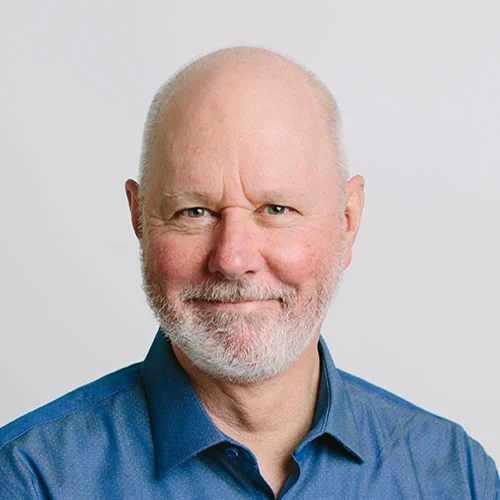
A California native, David Beers is the founding editor of TheTyee.ca, a website of news and opinions concerning life in British Columbia.
He won a National Magazine Award in 1993 for his essay The Crash Of Blue Sky California, which appeared in Harper's. He is a former editor of the San Francisco Examiner's Sunday magazine and Mother Jones magazine. His work has appeared in the New York Times Magazine, Vogue, the Los Angeles Times Magazine and The Nation.
Beers came to Vancouver in the 1990s and quickly gained entry to the Pacific Press hierarchy, hoping to greatly improve book coverage in The Vancouver Sun. When he fell out of favour and left The Vancouver Sun, he published an "insider's view" of what was wrong with the newspaper.
Blue Sky Dream: A Memoir of America's Fall From Grace (Doubleday 1996) is about growing up in middle-class suburban California.
BOOKS:
Blue Sky Dream: A Memoir of America's Fall From Grace (Doubleday, 1996)
Points of Interest: In Search of the Places, People, and Stories of BC (Greystone, 2024) $24.95 9781778401381
[BCBW 2024]
***
Points of Interest: In Search of the Places, People, and Stories of B.C.
Edited by David Beers & andrea bennett (Greystone $24.95)
Review by Heidi Greco (BCBW 2024)
Readers of the online news provider, The Tyee, will be familiar with the names of many of the writers whose work is included in this anthology. Their articles take us the length and breadth of the province, from Atlin to Victoria; Bella Coola to Creston. Better than any road trip I’ve yet managed, these stories about our province make me hungry to explore.
Points of Interest editors David Beers and andrea bennett have selected a range of writings that span more than geography. “Many people are drawn to this far western side of Canada because spiritually, intellectually, viscerally, they know they belong on that edge,” says Beers in his introduction. “This book offers thirty opportunities to sample such essences, through voices as varied as our sprawling, geographically and culturally diverse province.”
And sprawling they are. Neil Griffin offers an array of facts about the always-intriguing monkey puzzle tree, from its prehistoric origins in the mountainous regions of Chile to tracking how it made its way to Vancouver Island and beyond. Another treasure revealed, this time a human one, is a down-to-earth conversation with the late author, Anne Cameron at her home in the remote village of Tahsis. Cameron’s publisher, Howard White, has called her “the William Faulkner of the B.C. coast,” an accolade that rises from her skill at describing our coast. An author with opinions both strong and plainly put, when asked how she’d like to be remembered, Cameron replied, “I don’t think we should make a big point of remembering anybody. We should maybe just put all our energy into making things better for the next bunch.”
Several writers concern themselves with ways that indeed are making things better, like Jim Grieshaber-Otto who runs a family farm in Agassiz. With help from UBC’s Community Supported Agriculture program, they’ve learned to grow wheat, along with rye and oats. As journalist Christopher Cheung points out, “the vast majority of B.C.’s grain comes from the Peace River region,” yet by the time you read this, a great deal of that valuable farmland in the Peace will have been flooded by the extensive reservoir of water at Site C. It’s probably a good thing that farmers in the rainy Lower Mainland are learning how to grow the grains we rely upon for our daily bread.
Meghan Mast’s piece puts its focus on Gina Laing, now in her seventies, who endured ten years in residential school as a child. Laing’s memories range from idyllic scenes of bathing in the river with her grandmothers (before being taken away) to the day she sat planning her own death, a gun held to her mouth (after returning home). Luckily for her—and us—she was saved from suicide. Among many accomplishments in her life, she testified at the Truth and Reconciliation Commission’s hearings. The stories she shares are heartbreaking and include having to hide from her own father, who’d also gone through the residential school system. Mast cites an anthropologist who compares the intergenerational trauma felt by our Indigenous sisters and brothers to those of the children of Holocaust survivors.
Some of the pieces raise more questions than they answer. Michelle Gamage writes about the aftermath of 2021’s White Rock Lake fire “north of Kelowna...along the highway toward Kamloops.” It burned “an area seven times the size of Vancouver and caused at least $77 million in insured damage.” As with any fire—forest-based or restricted to a single dwelling—there are challenges when it comes to dealing with insurance providers. In the fire Gamage writes about, such matters are further complicated because many of the victims include those unable to acquire the small protection afforded by insurance, all because companies often refuse to sell a policy to those who live in situations deemed high-risk.
And no book about our beautiful province would be complete without discussions of the natural resources here, and about the ways they’ve been depleted. Arno Kopecky’s piece, originally published on The Tyee in 2021, brings voices from both sides of the dispute at Fairy Creek. Still, it’s hard to think about “trees that range from 250 to two thousand years old” being felled. The current state of dwindling wild salmon populations is in stark contrast to a comment included in Colleen Kimmett’s piece, “Xwìsten” where Chico Williams, a ferry operator on the Fraser River claims that “migrating sockeye would be so thick…you could walk across the river without getting your feet wet.”
As Michael John Lo points out in his piece about Cumberland, “A museum is a place that holds stories of the past…also a place that holds space for the present.” Like just such a museum, this book takes us on adventures most of us will never experience: a cattle drive, a rather pokey train ride, hours of travel by boat to simply pick up the mail. You might like to think of it as a road trip of the mind—full of promises of places to go, come summer again. 9781778401381
Heidi Greco lives on the territory of the Semiahmoo First Nation in Surrey where, according to one of the “Quick Facts” at the end of each chapter in Points of Interest, Lady Gaga once played a gig with tickets going for $25.
He won a National Magazine Award in 1993 for his essay The Crash Of Blue Sky California, which appeared in Harper's. He is a former editor of the San Francisco Examiner's Sunday magazine and Mother Jones magazine. His work has appeared in the New York Times Magazine, Vogue, the Los Angeles Times Magazine and The Nation.
Beers came to Vancouver in the 1990s and quickly gained entry to the Pacific Press hierarchy, hoping to greatly improve book coverage in The Vancouver Sun. When he fell out of favour and left The Vancouver Sun, he published an "insider's view" of what was wrong with the newspaper.
Blue Sky Dream: A Memoir of America's Fall From Grace (Doubleday 1996) is about growing up in middle-class suburban California.
BOOKS:
Blue Sky Dream: A Memoir of America's Fall From Grace (Doubleday, 1996)
Points of Interest: In Search of the Places, People, and Stories of BC (Greystone, 2024) $24.95 9781778401381
[BCBW 2024]
***
Points of Interest: In Search of the Places, People, and Stories of B.C.
Edited by David Beers & andrea bennett (Greystone $24.95)
Review by Heidi Greco (BCBW 2024)
Readers of the online news provider, The Tyee, will be familiar with the names of many of the writers whose work is included in this anthology. Their articles take us the length and breadth of the province, from Atlin to Victoria; Bella Coola to Creston. Better than any road trip I’ve yet managed, these stories about our province make me hungry to explore.
Points of Interest editors David Beers and andrea bennett have selected a range of writings that span more than geography. “Many people are drawn to this far western side of Canada because spiritually, intellectually, viscerally, they know they belong on that edge,” says Beers in his introduction. “This book offers thirty opportunities to sample such essences, through voices as varied as our sprawling, geographically and culturally diverse province.”
And sprawling they are. Neil Griffin offers an array of facts about the always-intriguing monkey puzzle tree, from its prehistoric origins in the mountainous regions of Chile to tracking how it made its way to Vancouver Island and beyond. Another treasure revealed, this time a human one, is a down-to-earth conversation with the late author, Anne Cameron at her home in the remote village of Tahsis. Cameron’s publisher, Howard White, has called her “the William Faulkner of the B.C. coast,” an accolade that rises from her skill at describing our coast. An author with opinions both strong and plainly put, when asked how she’d like to be remembered, Cameron replied, “I don’t think we should make a big point of remembering anybody. We should maybe just put all our energy into making things better for the next bunch.”
Several writers concern themselves with ways that indeed are making things better, like Jim Grieshaber-Otto who runs a family farm in Agassiz. With help from UBC’s Community Supported Agriculture program, they’ve learned to grow wheat, along with rye and oats. As journalist Christopher Cheung points out, “the vast majority of B.C.’s grain comes from the Peace River region,” yet by the time you read this, a great deal of that valuable farmland in the Peace will have been flooded by the extensive reservoir of water at Site C. It’s probably a good thing that farmers in the rainy Lower Mainland are learning how to grow the grains we rely upon for our daily bread.
Meghan Mast’s piece puts its focus on Gina Laing, now in her seventies, who endured ten years in residential school as a child. Laing’s memories range from idyllic scenes of bathing in the river with her grandmothers (before being taken away) to the day she sat planning her own death, a gun held to her mouth (after returning home). Luckily for her—and us—she was saved from suicide. Among many accomplishments in her life, she testified at the Truth and Reconciliation Commission’s hearings. The stories she shares are heartbreaking and include having to hide from her own father, who’d also gone through the residential school system. Mast cites an anthropologist who compares the intergenerational trauma felt by our Indigenous sisters and brothers to those of the children of Holocaust survivors.
Some of the pieces raise more questions than they answer. Michelle Gamage writes about the aftermath of 2021’s White Rock Lake fire “north of Kelowna...along the highway toward Kamloops.” It burned “an area seven times the size of Vancouver and caused at least $77 million in insured damage.” As with any fire—forest-based or restricted to a single dwelling—there are challenges when it comes to dealing with insurance providers. In the fire Gamage writes about, such matters are further complicated because many of the victims include those unable to acquire the small protection afforded by insurance, all because companies often refuse to sell a policy to those who live in situations deemed high-risk.
And no book about our beautiful province would be complete without discussions of the natural resources here, and about the ways they’ve been depleted. Arno Kopecky’s piece, originally published on The Tyee in 2021, brings voices from both sides of the dispute at Fairy Creek. Still, it’s hard to think about “trees that range from 250 to two thousand years old” being felled. The current state of dwindling wild salmon populations is in stark contrast to a comment included in Colleen Kimmett’s piece, “Xwìsten” where Chico Williams, a ferry operator on the Fraser River claims that “migrating sockeye would be so thick…you could walk across the river without getting your feet wet.”
As Michael John Lo points out in his piece about Cumberland, “A museum is a place that holds stories of the past…also a place that holds space for the present.” Like just such a museum, this book takes us on adventures most of us will never experience: a cattle drive, a rather pokey train ride, hours of travel by boat to simply pick up the mail. You might like to think of it as a road trip of the mind—full of promises of places to go, come summer again. 9781778401381
Heidi Greco lives on the territory of the Semiahmoo First Nation in Surrey where, according to one of the “Quick Facts” at the end of each chapter in Points of Interest, Lady Gaga once played a gig with tickets going for $25.
Articles: 1 Article for this author
At the World’s Edge
With a foreword by Tyee editor David Beers, Claudia Cornwall’s At the World's Edge-Curt Lang’s Vancouver, 1937-1998 (Mother Tongue $29.95) is tribute to beat poet and painter turned Renaissance man Curt Lang who met Malcolm Lowry as a teenager and befriended poets Al Purdy, Peter Trower, John Newlove, and Jamie Reid; artists Fred Douglas, David Marshall, and Roy Kiyooka; and musicians Al Neil, and Glenn MacDonald. A street photographer in the early 1970s, he later built boats and fished in the Prince Rupert vicinity. In his forties, he was awarded two patents, and started several companies, within the high-tech industry. He also developed hardware and software for the railroad industry that today is used all over North America. At the World’s Edge includes Lang’s unpublished photographs of Vancouver, as well as previously unpublished drawings, paintings, and poetry. Claudia Cornwall draws on conversations during her (and her husband’s) twelve-year friendship with Curt. 978-1-896949-17-8