Home
Home
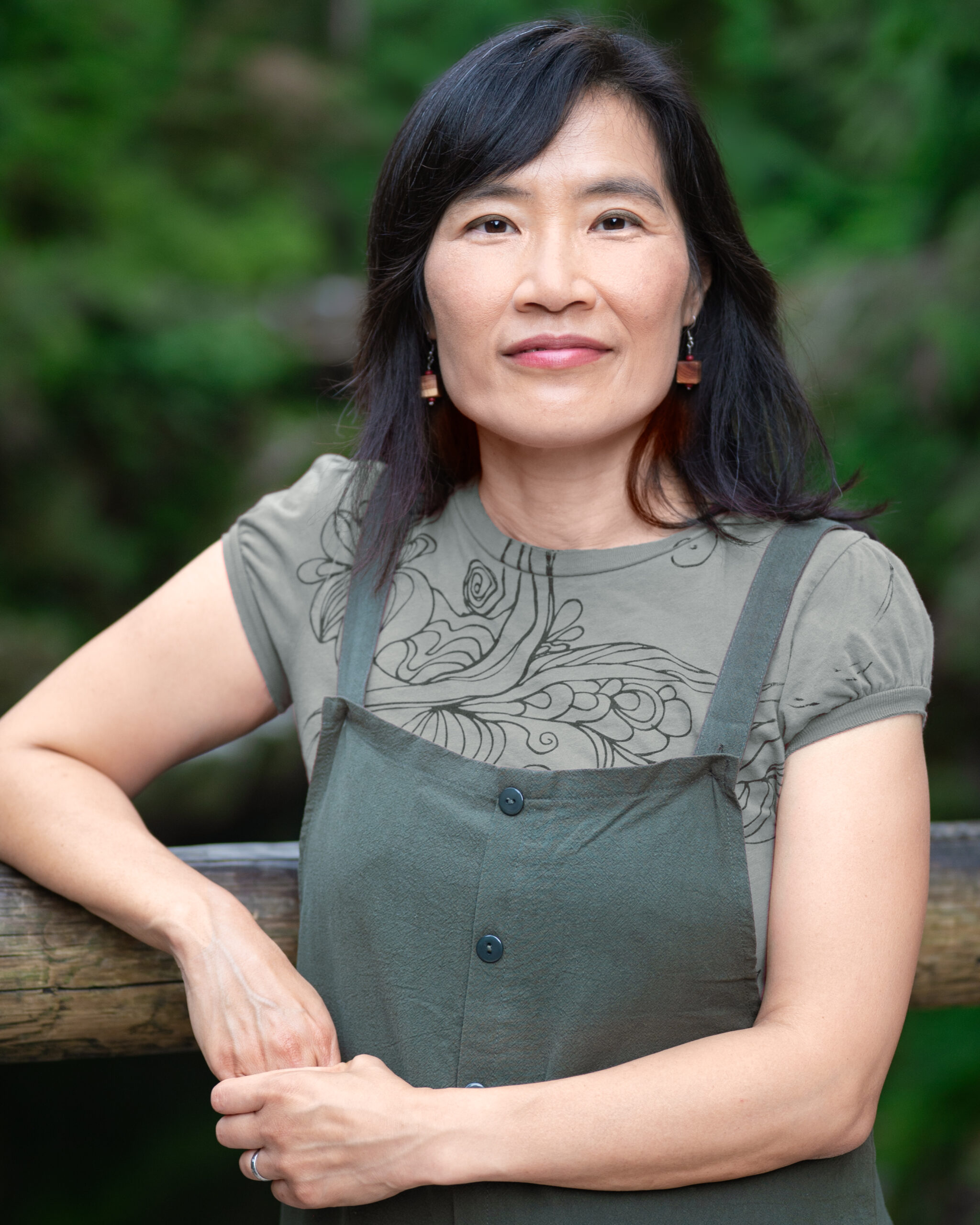
Masquerade, a story by Wiley Ho of North Vancouver, was selected by novelist Eileen Cook as the winning entry for BC-Yukon Short 2020, the Federation of BC Writers 4th annual short story contest. It appeared in WordWorks, the Fed's flagship magazine. Born in Taiwan, Ho moved with her family to Canada when she was eight. She identifies as "Generation 1.5, inhabiting that space between the here and there-ness of two countries, several cultures and multiple selves." She is working on a collection of short stories about her Taiwanese-Canadian childhood.
The memoir The Astronaut Children of Dunbar Street (Douglas & McIntyre $24.95) is an intimate geopolitical account of a family fractured by distance and borders, split between Taiwan and Canada. Author Wiley Wei-Chiun Ho, who identifies as Generation 1.5, explores the liminal spaces between cultures, languages and selves and is currently based in North Vancouver. The book illuminates the experience of countless “astronaut children” and “parachute kids”—children left unsupervised in Canada, the US, Australia or New Zealand after their immigrant parents returned overseas for work—a story largely absent from the literary landscape. Ho’s family emigrated from Taiwan to Canada in 1979, but a deep recession forced her parents to return to Taiwan, leaving young Wiley and her siblings behind in Vancouver with only two rules: study hard and stay out of trouble.
BOOKS:
The Astronaut Children of Dunbar Street (Douglas & McIntyre $24.95) 9781771624794
[BCBW 2025]
***
The memoir The Astronaut Children of Dunbar Street (Douglas & McIntyre $24.95) is an intimate geopolitical account of a family fractured by distance and borders, split between Taiwan and Canada. Author Wiley Wei-Chiun Ho, who identifies as Generation 1.5, explores the liminal spaces between cultures, languages and selves and is currently based in North Vancouver. The book illuminates the experience of countless “astronaut children” and “parachute kids”—children left unsupervised in Canada, the US, Australia or New Zealand after their immigrant parents returned overseas for work—a story largely absent from the literary landscape. Ho’s family emigrated from Taiwan to Canada in 1979, but a deep recession forced her parents to return to Taiwan, leaving young Wiley and her siblings behind in Vancouver with only two rules: study hard and stay out of trouble.
BOOKS:
The Astronaut Children of Dunbar Street (Douglas & McIntyre $24.95) 9781771624794
[BCBW 2025]
***
The Astronaut Children of Dunbar Street
by Wiley Wei-Chiun Ho (D&M $24.95)
Review by Susan Sanford Blades (BCBW 2026)
The adults of the 1980s have been labelled the “Me Generation”—one in which both parents typically worked outside the home, putting their career aspirations ahead of the needs of their children. The children of the 80s, Generation X, have been jokingly referred to as being raised on hose water and neglect. It was the era of latchkey kids and TV dinners. Wiley Wei-Chiun Ho, a child of the 80s, was not, like many Canadian children, left alone with her siblings to watch shows like Kate and Allie and The Facts of Life for a couple of hours after school. When Ho was twelve years old, her parents left her and her siblings for good, to live in Canada on their own.
Ho’s debut memoir, The Astronaut Children of Dunbar Street, tells the story of how her parents—nervous about Taiwan’s “ambiguous global identity” and in search of stability—immigrated with their children to Vancouver from Taiwan when Ho was nine years old. After staying three years and becoming Canadian citizens, her parents, still struggling to find work and to belong in a rainy, English-speaking land that did not recognize her father’s medical credentials, left her older brother in charge of her and her three sisters and moved back to Taiwan. There, “[t]hey would earn ten times what they could hope to make in Canada.”
Ho begins her book during the Covid era, when, as an adult, she is quarantining in a hotel room in Taiwan in hopes of seeing her dying father. From there, she guides us chronologically through her story from childhood—packing only clothes, shoes and a rice cooker (because “[r]ice is home”)—en route to Canada to her lonely, unsupervised adolescence—and back to her present-day fraught relationship with her parents. Throughout, she tackles questions of what makes a family and a home. “In Mandarin, jiā means home and family interchangeably, the two meanings intertwined and inseparable. But in Canada, I discovered that they could be separated.”
Her feelings of abandonment, and their long-term effects on her and the relationships she attempts to form throughout her life, take centre stage in the memoir. Through Ho’s in-depth exploration of her feelings, she expands her own story into one that mirrors many people’s childhoods. It speaks to the same feelings of parental disconnection that Teresa Wong’s 2024 graphic memoir, All Our Ordinary Stories (Arsenal)—about her parents, who fled mainland China for Canada in the 1970s—displayed so deftly and devastatingly through both her words and the swathes of negative space in her illustrations. As a child of the 80s myself, even though both of my parents were born in Canada and were physically with me throughout my childhood, I connected both with the Canadian cultural artifacts Ho enjoyed—the Choose Your Own Adventure novels she learned English with and the TV episodes of Wok With Yan her mother learned to cook with—as well as with her feelings of abandonment from parents who valued financial stability over emotional stability.
In one of the most significant sections of the memoir, during her teen years, Wiley Wei-Chiun Ho suffered from an eating disorder. She became so emaciated that her parents returned to Canada for an emergency visit to restore her to health. In the memoir, her anorexia and subsequent bulimia become a metaphor for her adolescence. It was an exercise in depravation, a desire to stop and reverse the sudden changes happening to her. In physically vanishing, Ho wanted to disappear from her current situation and slip back into her former life as a child with parents who were there to care for her. She states a recurring theme of her childhood: “I marveled at how little I needed to survive.”
Along with her emotional honesty, a strength of this memoir lies in Ho’s vivid descriptions, which she shapes to fit her age as narrator. During her childhood, on the one camping trip her still-whole family attempted in order to be “real Canadians,” their tent was “[a] lopsided monster with orange skin.” As a teenager, we feel the dark weight of her loneliness: “I imagined my words sinking into the Pacific, swallowed by its cold sunless depths.” And as an adult, she welcomes us into the sensory richness during her visits to Taiwan: “The screaming butcher always made me flinch. I would hold my breath against the bloody smells coming off his wooden block and squeeze past the meat hooks dangling dark, dripping organs.”
The Astronaut Children of Dunbar Street is a compelling and emotionally astute look at the challenges that immigrant families face, and an inquiry into the meanings of family, home, stability and forgiveness. 9781771624794
Susan Sanford Blades’ debut novel, Fake It So Real, won the 2021 ReLit Award and was a finalist for the 2021 Ethel Wilson Fiction Prize. Her second novel, Girl on Paper, will be published by Nightwood Editions in spring, 2027.
***