Home
Home
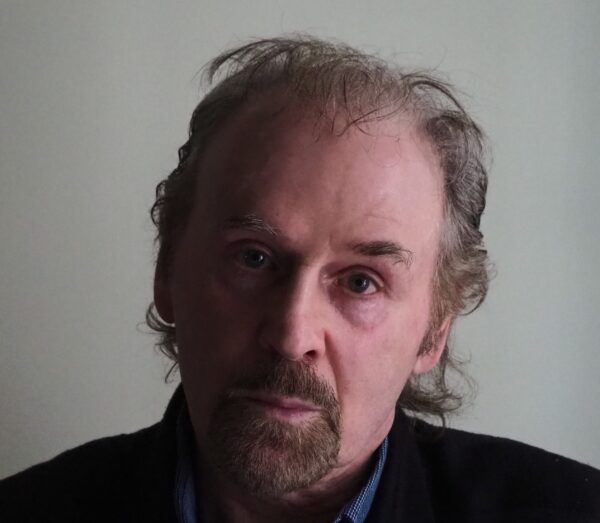
Russell Thornton is a North Vancouver poet. He is the author of ten collections, including Two Songs: Selected Poems 2000-2025 (Harbour Publishing, 2026).
Thornton’s collections House Built of Rain (Harbour, 2003) and Birds, Metals, Stones & Rain (Harbour, 2013) were finalists for the Dorothy Livesay Poetry Prize. Birds, Metals, Stones & Rain was also a finalist for the Governor General's Award for Poetry and the Raymond Souster Award. His collection The Hundred Lives (Quattro, 2014) was a finalist for the Griffin Poetry Prize.
Thornton won first prize in the League of Canadian Poets National Contest in 2000 and The Fiddlehead magazine's Ralph Gustafson Prize in 2009.
Thornton's poems have appeared widely in Canadian literary magazines, and in a number anthologies including In Fine Form: The Anthology of Canadian Form Poetry (Polestar, 2005 and Caitlin, 2016), Rocksalt: An Anthology of Contemporary BC Poetry (Mother Tongue, 2008), Open Wide A Wilderness: Canadian Nature Poems (Wilfred Laurier University, 2009), The Montreal International Poetry Prize 2011 Global Anthology (Signal, 2012), Best Canadian Poetry in English (Tightrope, 2012 and Biblioasis, 2019), Refugium (Caitlin, 2017) Sweet Water (Caitlin, 2020), and Worth More Standing (Caitlin, 2022). He is one of the poets whose conversation and poems are included in What the Poets are Doing (Nightwood, 2018). His poetry has been featured several times on Vancouver buses and bus shelters as part of B.C.'s Poetry in Transit; it has also appeared in translation in anthologies and literary journals in Greece, Romania, Israel, and Ukraine.
Awards:
First Prize, League of Canadian Poets National Contest, 2000 ("The Beginnings of Stars")
Shortlisted, Dorothy Livesay Poetry Prize, BC Book Prizes, 2004 (House Built of Rain)
Shortlisted, ReLit Poetry Award, 2004 (House Built of Rain)
Ralph Gustafson Prize, 2009 ("The Rain Bush")
Shortlisted, Governor General’s Award for Poetry, 2013 (Birds, Metals, Stones & Rain)
Shortlisted, Dorothy Livesay Poetry Prize, BC Book Prizes, 2014 (Birds, Metals, Stones & Rain)
Shortlisted, Raymond Souster Award, 2014(Birds, Metals, Stones & Rain)
Shortlisted, Griffin Poetry Prize, 2015 (The Hundred Lives)
BOOKS:
The Fifth Window (Thistledown Press, 2000)
A Tunisian Notebook (Seraphim Editions, 2002)
House Built of Rain (Harbour Publishing, 2003)
The Human Shore (Harbour Publishing, 2006)
Birds, Metals, Stones & Rain (Harbour Publishing, 2013)
The Hundred Lives (Quattro Books, 2014)
The Broken Face (Harbour Publishing, 2018) $18.95 978-1-55017-844-9
Answer to Blue (Harbour Publishing, 2021) $18.95 9781550179675
The White Light of Tomorrow (Harbour Publishing, 2023) $22.95 9781990776533
Two Songs: Selected Poems 2000-2025 (Harbour Publishing, 2026) $26.95 9781998526574
[BCBW 2025]
***
Thornton’s collections House Built of Rain (Harbour, 2003) and Birds, Metals, Stones & Rain (Harbour, 2013) were finalists for the Dorothy Livesay Poetry Prize. Birds, Metals, Stones & Rain was also a finalist for the Governor General's Award for Poetry and the Raymond Souster Award. His collection The Hundred Lives (Quattro, 2014) was a finalist for the Griffin Poetry Prize.
Thornton won first prize in the League of Canadian Poets National Contest in 2000 and The Fiddlehead magazine's Ralph Gustafson Prize in 2009.
Thornton's poems have appeared widely in Canadian literary magazines, and in a number anthologies including In Fine Form: The Anthology of Canadian Form Poetry (Polestar, 2005 and Caitlin, 2016), Rocksalt: An Anthology of Contemporary BC Poetry (Mother Tongue, 2008), Open Wide A Wilderness: Canadian Nature Poems (Wilfred Laurier University, 2009), The Montreal International Poetry Prize 2011 Global Anthology (Signal, 2012), Best Canadian Poetry in English (Tightrope, 2012 and Biblioasis, 2019), Refugium (Caitlin, 2017) Sweet Water (Caitlin, 2020), and Worth More Standing (Caitlin, 2022). He is one of the poets whose conversation and poems are included in What the Poets are Doing (Nightwood, 2018). His poetry has been featured several times on Vancouver buses and bus shelters as part of B.C.'s Poetry in Transit; it has also appeared in translation in anthologies and literary journals in Greece, Romania, Israel, and Ukraine.
Awards:
First Prize, League of Canadian Poets National Contest, 2000 ("The Beginnings of Stars")
Shortlisted, Dorothy Livesay Poetry Prize, BC Book Prizes, 2004 (House Built of Rain)
Shortlisted, ReLit Poetry Award, 2004 (House Built of Rain)
Ralph Gustafson Prize, 2009 ("The Rain Bush")
Shortlisted, Governor General’s Award for Poetry, 2013 (Birds, Metals, Stones & Rain)
Shortlisted, Dorothy Livesay Poetry Prize, BC Book Prizes, 2014 (Birds, Metals, Stones & Rain)
Shortlisted, Raymond Souster Award, 2014(Birds, Metals, Stones & Rain)
Shortlisted, Griffin Poetry Prize, 2015 (The Hundred Lives)
BOOKS:
The Fifth Window (Thistledown Press, 2000)
A Tunisian Notebook (Seraphim Editions, 2002)
House Built of Rain (Harbour Publishing, 2003)
The Human Shore (Harbour Publishing, 2006)
Birds, Metals, Stones & Rain (Harbour Publishing, 2013)
The Hundred Lives (Quattro Books, 2014)
The Broken Face (Harbour Publishing, 2018) $18.95 978-1-55017-844-9
Answer to Blue (Harbour Publishing, 2021) $18.95 9781550179675
The White Light of Tomorrow (Harbour Publishing, 2023) $22.95 9781990776533
Two Songs: Selected Poems 2000-2025 (Harbour Publishing, 2026) $26.95 9781998526574
[BCBW 2025]
***
INTERVIEW:
Two Songs by Russell Thornton
(Harbour $26.95)
Based in North Vancouver, Russell Thornton is known for poetry that reflects on life, death and transformation. The author of nine previous poetry collections, Thornton has twice been shortlisted for major awards, including the Governor General’s Award and the Griffin Poetry Prize, and his poems have appeared widely in anthologies and international translation. His new collection gathers poems written between 2000 and 2025.
***
How would you describe the basis of your poetry?
I reach for lyrical intensity, though the details arise always from my own lived experience. I write about many things—my relations with others, the places I’ve lived in and visited—but it may be the landscape of North Vancouver and the surrounding area that most powerfully shapes my imagination. The mountain, forest, mist, cloud, creek, river, inlet and rain energies of my locale work their way persistently into my poems.
Your work is described as having “scenes ranging from the Greek sun of the Peloponnese to the firs on Vancouver’s North Shore.” How does travel inform your poetry?
There’s a saying: “Travels are the soul of the world.” I think in travelling you sometimes enter a state of timelessness—pure process, pure potential, pure relationship with whatever is before you. You move toward a promised land that seems to create itself moment by moment in the imagination.
When I was a teenager, I was desperate, as many teenagers are, to leave my familiar surroundings; I ended up going away for decades, returning for brief periods to drive a taxi. Of course, what I was really desperate for was access to parts of myself that eluded me but felt necessary for my psychological survival. And at a certain point, travelling leads beyond the personal into the deeper, shared regions of the psyche—those ancient energies common to all human beings.
In Greece I felt this repeatedly. I was struck by the power of the place—the hypnotic white light, the eerie omnipresent rock, the sea. And the people: their wild music, their gestures carrying excitation and vastness. I lived in Larissa and then Thessaloniki for three, four years and have returned several times, and feel a piercing nostalgia for these places. Greece tests a person; the culture insists that you reveal exactly who you are. You have no choice, just as the characters in ancient Greek drama have no choice in their defining moments. And yet, for all Greece and other distant places have given me, I am finally nothing if not a North Vancouver poet. Leaving my home and returning to it has given me a renewed sense of the mystery of my origins. One image is permanent in me and encapsulates this: looking west past the Lions Gate Bridge toward the Salish Sea, where the sun blazes over open water while rain falls softly on North Vancouver. The light pours through the rain in delicate, trembling rays. That moment contains the essence of travel: the desire for transformation, the dream of creativity. That interchange of sunlight and rain is a sudden conjuration: an elemental summons of attention. So, ironically, here, more than anywhere else, I have a chance to undergo and enact the transformation that once seemed possible only in faraway settings.
You use a Nikos Kazantzakis epigraph for this collection: “Life and Death were songs…” How does this concept of “life-death songs” serve as the central theme for this collection gathered over 25 years?
When I began to write seriously, a well-known older Canadian poet said to me, “There are only two subjects worth writing about, sex and death. Even when you think you’re writing about other things, at your best, that’s what you’re writing about.” At the time, I wondered if he was simply being provocative, but I’ve since recognized the truth of his words. Love, eros—the life force—and its counterpart, death, are the poles across which the tightrope of our lives is strung. As Nikos Kazantzakis declares in his monumental poetic sequel to Homer’s Odyssey, life and death are songs. The poems in my collection record my attempts to sing my own versions of those songs. Gathered over two and a half decades, these poems trace the ways I have tried to walk that tightrope—striving to utter both desire and loss, presence and absence, and to negotiate the tension between life and death that defines what it means to be human.
Critics have praised your “masterful lyrics” and impeccable craft that balances “living with one’s gaze on mortality and suffering” with “healing and regeneration.” How do you maintain this balance in your poems?
The “best words in the best order,” as Coleridge said; a “dream dreamed in the presence of reason,” in Tomasso Ceva’s phrase; “a room of marvels,” as Andre Breton called it—these and many other characterizations of poetry, offered by master poets both in their sayings and lyric examples, guide me in my own attempts. It seems inevitable to me that the highest levels of poetic craft enact a vision in which paradox opens its door to transcendence—where suffering and joy, hurt and healing, the material and the spiritual, mortality and the eternal move toward union and become one. 9781998526574
Articles: 2 Articles for this author
Portia Priegert on Russell Thornton
Profile
By Portia Priegert
Even in an interview - that most utilitarian of conversations - Russell Thornton has a poet's voice: soft, with a lyrical inflection, offering both fluid metaphor and a probing rumination.
His poetry is like that too. Four well-received books, including his most recent, The Human Shore, explore with impeccable eloquence his preoccupations with nature, travel, solitude and family history.
These are typically Canadian themes, says Thornton, who notes that Canadian writers are obsessed with their roots and family lineages, concerns that often operate in opposition to the wilderness setting and the chill of the Arctic wind.
"For me, it has to do with that strange loneliness that is part of Canada. You hear it in pop songs - Joni Mitchell and Neil Young, these kind of people - you hear that vastness of the landscape and that coldness.";
Thornton places himself in "the real deep mainstream"; of Canadian letters - a lyric poet who distills the natural world, current social realities and the processes of history through the idiosyncrasies of his own personality. He cites the influence of some of Canada's poetic giants - men such as Irving Layton, Al Purdy, Earle Birney and Don McKay.
Thornton describes his creative process as circular, drawing comparisons to the oral traditions of indigenous people.
"I'll start with an image. I'll try to open myself up so that I receive impressions that gather around that image and that help that image to circle around some sort of idea.";
While he eschews formal structures like sonnets or villanelles he spends hours honing what he calls "systems of sonic glue"; - the basic rhythms and flows of language.
"I try to write musically. I pay a lot of attention to the music and the kinetic energy that can be struck between syllables.";
He also allows stories to enrich his work. "I really think it's inevitable that when you try to write about people, narrative is going to creep in. And it's a marvelous creeping in. Creeping in sounds negative but, of course, it's not. It's a wonderful invasion. Story is magical.";
Thornton is an inveterate traveler and lived in Europe for years as a young adult, drifting from country to country, always writing about his impressions, or, as he puts it "blackening pages"; of his notebooks. "I had wanderlust really bad, curiosity, all the standard stuff,"; he says.
Thornton is also interested in ancient cultures and lived for a time in Wales and Greece.
He returned to his native Vancouver 10 years ago and earns a living with two part-time jobs - doing home repairs and teaching English - while stealing moments in between for his craft.
He offers simple advice to aspiring poets. "Read, read, read. Write, write, write. A lot of people who want to write don't actually want to read and the two things are two sides of the same coin.";
But don't expect words to come easily, he warns. "The writing itself, it's a hard slog. It's not just something you spill out and it's done. Spilling out may be the first phase, but after that it's just labour - it's blood, sweat and tears. Language is intractable.";
The Hundred Lives (Quattro $18)
Article (2015)
Having lived for several years in Larissa and Thessaloniki, Greece, Russell Thornton has included poems set in the eastern Mediterranean for his sixth collection, The Hundred Lives (Quattro $18).Some of his previous work has appeared in Greek translation in the anthologies Foreign Language Poems on Thessaloniki (Kedros, Athens, 1997), Into a Foreign Tongue Goes Our Grief: Poems On or After Cavafy (Bilieto, Peania, 2000) and Thessalonki: A City in Literature (Metaixmio, Athens, 2002).
978-1-927443-68-2
BCBW (Autumn)