Home
Home
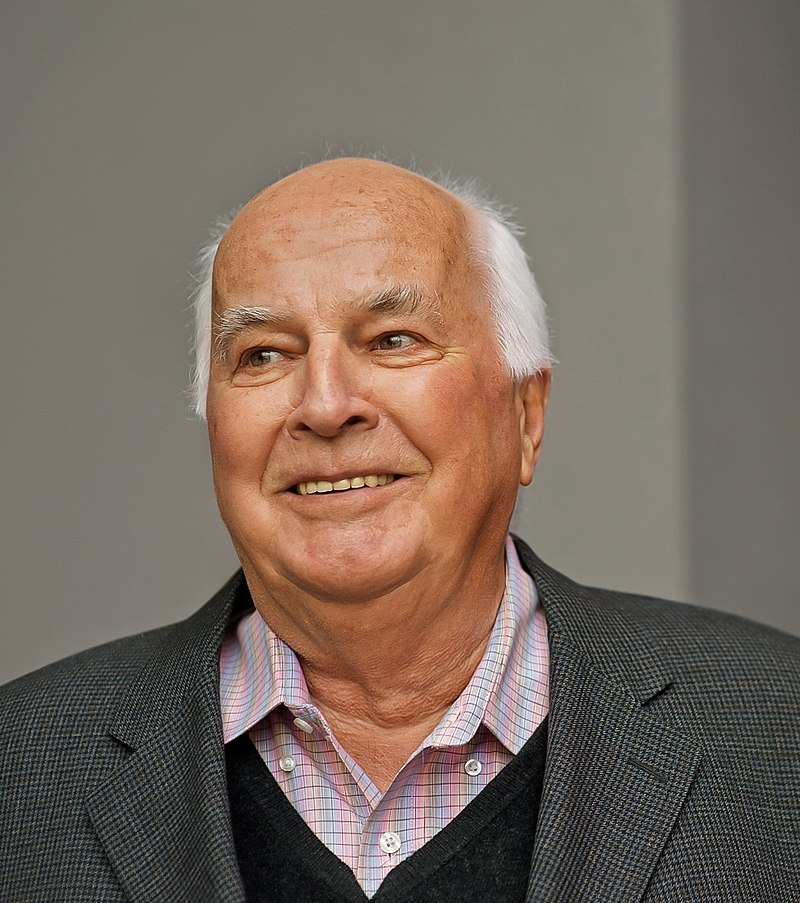
Bob Williams is a former British Columbia cabinet minister who played a key role in establishing the Agricultural Land Reserve and Insurance Corporation of British Columbia during BC’s first NDP government in the 1970s. More recently, Williams was influential in building the Vancity Credit Union into the leading co-operative financial institution in Western Canada.
Bob Williams died in St. Paul's Hospital in Vancouver on July 7, 2024 at the age of 91.
+++
Using Power Well: Bob Williams and the Making of British Columbia by Bob Williams with Benjamin Isitt and Thomas Bevan (Nightwood Editions, 2022)
Review by Rod Mickleburgh
It was a giddy group that gathered in the chambers of the BC legislature that early fall evening in 1972, unable to restrain their joy at being sworn in as the province’s first socialist cabinet. They had been through the wars against the indomitable W.A.C. Bennett and his Social Credit Party. Now, against all expectations, here they were, inside the gates at last. After 20 years of unrestrained power, Bennett and the Socreds had been toppled. They called themselves “the Dirty Dozen.” As the historic victory by Dave Barrett and the New Democratic Party approaches its 50th anniversary, only one remains.
At 89, Bob Williams is the great survivor. With family roots stretching back to the Winnipeg General Strike and a career extending into the 21st century, his long, event-filled life is full of signature achievements that have had a lasting impact on the province. Variously feared, loathed, respected and admired, Williams is one of BC’s most complex and controversial individuals. Yet today he is relatively little-known to many British Columbians. So his episodic memoir, Using Power Well, could not be more welcome.
It is not a definitive account. This is very much Bob Williams’ own, sometimes immodest view of events. But that does not lessen its value as an insider’s glimpse into much of the history he was part of for so many years, penned by a fierce adversary of the corporate elite and a passionate believer in augmenting the public good.
Kudos to Ben Isitt and Thomas Bevan for fine-tuning remembrances that Williams wrote out during a month in Key West, Florida several years ago and adding to them from a series of interviews they did after his return. It is a fine, readable book.
What a life. Director of planning for Delta at the age of 26 (fired for preferring farmland over development); the first East Vancouverite elected to city council since the 1930s (Harry Rankin finished just behind him); 17 years as an NDP MLA, including three years as the Barrett government’s most powerful cabinet minister; deputy minister for Crown Corporations under NDP Premier Mike Harcourt; chair of ICBC; 21 years on the board, including time as chair, of Vancity, helping turn the institution into the largest, most innovative, progressive and asset-rich credit union in Canada; owner of Vancouver’s beloved Railway Club for 29 years. And more.
But the heart of the book is that first NDP administration headed by Dave Barrett, arguably the most radical government in the country’s history. In just 39 months they did things—remarkable things—at a pace never seen before or since. A half century later, many are with us still.
While presiding over this unparalleled legacy of achievement, Barrett was the government’s folksy, public face, operating more on gut instinct than anything else. Behind the scenes, it was Williams who pulled many of the levers of power. Both had grown up in East Vancouver, and they worked well together.
Charmingly, Williams recounts the day after the election when the two met for lunch at the barebones Only Café in the midst of Vancouver’s hardscrabble Downtown Eastside to talk about transition to government. There was no team of bureaucrats and party advisers brimming with fact-filled binders. Instead, Williams had sketched out a likely cabinet and some ambitious goals on the back of a large manila envelope. Barrett agreed with most of it, and that was that.
Williams took to power like a duck to water. He operated as a “Super Minister”: heading Lands, Forests and Water Resources, along with Parks and Recreation and his master creation, the Environmental Land Use Committee, which used a piece of left-over Socred legislation to enable many of the new government’s major reforms, including its sacrosanct and most valuable legacy, the Agricultural Land Reserve (ALR).
The ALR would almost certainly not be the ongoing success it is without Bob Williams taking over the file from ineffectual Agriculture Minister Dave Stupich. Such fix-it interventions were standard fare for Williams, who, by his own admission, was “basically running 5 or 6 ministries.” He embraced the gospel of doing rather than dithering.
Williams also spearheaded government purchases of failing private enterprises to an extent unimaginable today. Pulp mills, sawmills, a land development company, a poultry plant and the Princess Marguerite steamship. In addition to preserving jobs, all began making money. “With my socialist roots, I didn’t realize I had entrepreneurial instincts until we were in government,” says Williams, fondly.
How was the rock ‘n’ rolling Barrett government able to do so much during its brief time in office? By bypassing the bureaucracy and bringing in their own people to effect change, Williams declares. “I was hiring and there was no one to stop me.”
“Don’t expect reform or excitement from bureaucracies these days,” he adds.
Among his many tangible footprints from the time are Robson Square (set in motion by a call from a phone booth to architect Arthur Erickson. “Process never even crossed my mind,” he writes), the resort municipality of Whistler, the Islands Trust and a doubling of public parkland.
“I recall Dave Barrett saying: ‘Williams, there’s never been a government like us in all history.’…On reflection, Dave was so right!” Those three years, he says, were “the most exhilarating, exhausting years of my life.”
When the NDP was defeated in 1975, Williams hardly disappeared. He created multiple projects over the next 40 years. Few were inconsequential.
Williams’s evocative descriptions of his early years are an added pleasure. He sketches a bygone era, frequenting the long-demolished squatter settlements of Crabtown and Dollarton Flats on the shores of Burrard Inlet, friendly newsstand vendors, measuring the rainfall gauge on the roof of Vancouver City Hall and a summer forestry job in the West Kootenays when the CPR paddlewheeler, the S.S. Minto, still plied the Arrow Lakes.
Only in his late teens did he discover that his mother’s partner was not his father. His real father turned out to be the son of Bill Pritchard, sentenced to a year in Stony Mountain Penitentiary for his short time in Winnipeg to support the city’s momentous General Strike in 1919.
Williams details little time of his private life, apart from mentions of his marriage to Lea Forsyth, to whom he dedicates the book, a steamy affair with an unnamed secretary and a disclosure later in the book that he is gay.
Williams acknowledges he could be tough to deal with. “It was said that I didn’t suffer fools gladly, and I didn’t.” Elsewhere, he describes himself as, at times, “an arrogant son of a bitch,” warning in the preface of “hard-hitting, cutting criticism of former colleagues living and dead.” He also, unfairly in my view, lashes out at “big labour.”
Using Power Well does not provide a grand, sweeping perspective of Bob Williams’ life and times. It is narrowly focused and not without fault. But there is much to savour and chew over from someone the likes of which we are unlikely to see again. Recommended.
9780889714243
Rod Mickleburgh co-authored with Geoff Meggs, The Art of the Impossible: Dave Barrett and the NDP in Power, 1972-1975 (Harbour, 2012); and On the Line: A History of the British Columbia Labour Movement (Harbour, 2018) that won the George Ryga Award for social awareness in literature.
[BCBW 2022]
BOOKS:
Using Power Well: Bob Williams and the Making of British Columbia (Nightwood Editions, 2022) $22.95 9780889714243. Co-authored with Benjamin Isitt and Thomas Bevan.
[BCBW 2023]
Bob Williams died in St. Paul's Hospital in Vancouver on July 7, 2024 at the age of 91.
+++
Using Power Well: Bob Williams and the Making of British Columbia by Bob Williams with Benjamin Isitt and Thomas Bevan (Nightwood Editions, 2022)
Review by Rod Mickleburgh
It was a giddy group that gathered in the chambers of the BC legislature that early fall evening in 1972, unable to restrain their joy at being sworn in as the province’s first socialist cabinet. They had been through the wars against the indomitable W.A.C. Bennett and his Social Credit Party. Now, against all expectations, here they were, inside the gates at last. After 20 years of unrestrained power, Bennett and the Socreds had been toppled. They called themselves “the Dirty Dozen.” As the historic victory by Dave Barrett and the New Democratic Party approaches its 50th anniversary, only one remains.
At 89, Bob Williams is the great survivor. With family roots stretching back to the Winnipeg General Strike and a career extending into the 21st century, his long, event-filled life is full of signature achievements that have had a lasting impact on the province. Variously feared, loathed, respected and admired, Williams is one of BC’s most complex and controversial individuals. Yet today he is relatively little-known to many British Columbians. So his episodic memoir, Using Power Well, could not be more welcome.
It is not a definitive account. This is very much Bob Williams’ own, sometimes immodest view of events. But that does not lessen its value as an insider’s glimpse into much of the history he was part of for so many years, penned by a fierce adversary of the corporate elite and a passionate believer in augmenting the public good.
Kudos to Ben Isitt and Thomas Bevan for fine-tuning remembrances that Williams wrote out during a month in Key West, Florida several years ago and adding to them from a series of interviews they did after his return. It is a fine, readable book.
What a life. Director of planning for Delta at the age of 26 (fired for preferring farmland over development); the first East Vancouverite elected to city council since the 1930s (Harry Rankin finished just behind him); 17 years as an NDP MLA, including three years as the Barrett government’s most powerful cabinet minister; deputy minister for Crown Corporations under NDP Premier Mike Harcourt; chair of ICBC; 21 years on the board, including time as chair, of Vancity, helping turn the institution into the largest, most innovative, progressive and asset-rich credit union in Canada; owner of Vancouver’s beloved Railway Club for 29 years. And more.
But the heart of the book is that first NDP administration headed by Dave Barrett, arguably the most radical government in the country’s history. In just 39 months they did things—remarkable things—at a pace never seen before or since. A half century later, many are with us still.
While presiding over this unparalleled legacy of achievement, Barrett was the government’s folksy, public face, operating more on gut instinct than anything else. Behind the scenes, it was Williams who pulled many of the levers of power. Both had grown up in East Vancouver, and they worked well together.
Charmingly, Williams recounts the day after the election when the two met for lunch at the barebones Only Café in the midst of Vancouver’s hardscrabble Downtown Eastside to talk about transition to government. There was no team of bureaucrats and party advisers brimming with fact-filled binders. Instead, Williams had sketched out a likely cabinet and some ambitious goals on the back of a large manila envelope. Barrett agreed with most of it, and that was that.
Williams took to power like a duck to water. He operated as a “Super Minister”: heading Lands, Forests and Water Resources, along with Parks and Recreation and his master creation, the Environmental Land Use Committee, which used a piece of left-over Socred legislation to enable many of the new government’s major reforms, including its sacrosanct and most valuable legacy, the Agricultural Land Reserve (ALR).
The ALR would almost certainly not be the ongoing success it is without Bob Williams taking over the file from ineffectual Agriculture Minister Dave Stupich. Such fix-it interventions were standard fare for Williams, who, by his own admission, was “basically running 5 or 6 ministries.” He embraced the gospel of doing rather than dithering.
Williams also spearheaded government purchases of failing private enterprises to an extent unimaginable today. Pulp mills, sawmills, a land development company, a poultry plant and the Princess Marguerite steamship. In addition to preserving jobs, all began making money. “With my socialist roots, I didn’t realize I had entrepreneurial instincts until we were in government,” says Williams, fondly.
How was the rock ‘n’ rolling Barrett government able to do so much during its brief time in office? By bypassing the bureaucracy and bringing in their own people to effect change, Williams declares. “I was hiring and there was no one to stop me.”
“Don’t expect reform or excitement from bureaucracies these days,” he adds.
Among his many tangible footprints from the time are Robson Square (set in motion by a call from a phone booth to architect Arthur Erickson. “Process never even crossed my mind,” he writes), the resort municipality of Whistler, the Islands Trust and a doubling of public parkland.
“I recall Dave Barrett saying: ‘Williams, there’s never been a government like us in all history.’…On reflection, Dave was so right!” Those three years, he says, were “the most exhilarating, exhausting years of my life.”
When the NDP was defeated in 1975, Williams hardly disappeared. He created multiple projects over the next 40 years. Few were inconsequential.
Williams’s evocative descriptions of his early years are an added pleasure. He sketches a bygone era, frequenting the long-demolished squatter settlements of Crabtown and Dollarton Flats on the shores of Burrard Inlet, friendly newsstand vendors, measuring the rainfall gauge on the roof of Vancouver City Hall and a summer forestry job in the West Kootenays when the CPR paddlewheeler, the S.S. Minto, still plied the Arrow Lakes.
Only in his late teens did he discover that his mother’s partner was not his father. His real father turned out to be the son of Bill Pritchard, sentenced to a year in Stony Mountain Penitentiary for his short time in Winnipeg to support the city’s momentous General Strike in 1919.
Williams details little time of his private life, apart from mentions of his marriage to Lea Forsyth, to whom he dedicates the book, a steamy affair with an unnamed secretary and a disclosure later in the book that he is gay.
Williams acknowledges he could be tough to deal with. “It was said that I didn’t suffer fools gladly, and I didn’t.” Elsewhere, he describes himself as, at times, “an arrogant son of a bitch,” warning in the preface of “hard-hitting, cutting criticism of former colleagues living and dead.” He also, unfairly in my view, lashes out at “big labour.”
Using Power Well does not provide a grand, sweeping perspective of Bob Williams’ life and times. It is narrowly focused and not without fault. But there is much to savour and chew over from someone the likes of which we are unlikely to see again. Recommended.
9780889714243
Rod Mickleburgh co-authored with Geoff Meggs, The Art of the Impossible: Dave Barrett and the NDP in Power, 1972-1975 (Harbour, 2012); and On the Line: A History of the British Columbia Labour Movement (Harbour, 2018) that won the George Ryga Award for social awareness in literature.
[BCBW 2022]
BOOKS:
Using Power Well: Bob Williams and the Making of British Columbia (Nightwood Editions, 2022) $22.95 9780889714243. Co-authored with Benjamin Isitt and Thomas Bevan.
[BCBW 2023]