Home
Home
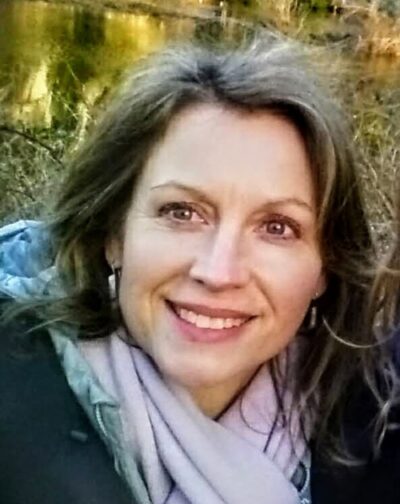
While trapped as a teenager in suburbia, Lisa Duncan dreamed of travelling the world and adventures outdoors. As a young adult, she mastered the art of climbing. Then, a setback as Duncan watched the onset of neurological diseases begin to destroy the bodies of her dad and brother. She saw how their lengthy illnesses took a toll on her mother (the main caregiver) even with Lisa's assistance. Being a loner, Duncan decided in 1996 to reclaim her identity and travel to Africa on her own – this at a time when there was no internet or Google Maps. She describes her ensuing adventures and lessons learned in the Chimanimani mountains in Zimbabwe, the dunes of Namibia and the Zambezi River in her memoir Chasing Africa: Fear Won’t Find Me Here (RMB $25). 9781771605816
***
Chasing Africa: Fear Won’t Find Me Here,
A Memoir by Lisa Duncan (Rocky Mountain Books $25)
Review by Caroline Woodward
There is lifelong value in the Grand Adventure we choose when we’re young as shown in Lisa Duncan’s memoir. Our travels can be our escape hatches, our tickets to places where we can be whoever we want to be in the company of strangers. Like Duncan, we’ll learn lessons, harsh and hurtful, as well as gloriously life-affirming lessons we have the rest of our lives to comprehend and to write about, if we so choose. If life favours us with good health, we may travel again. We’ll know what to pack and we’ll learn what emotional baggage to leave behind too.
As readers, we can be grateful to have had armchair African adventures along with Duncan’s 24-year-old self in 1996 but also, we’ll have been spared her difficult family history. What are the odds, in a family of six, for one member, the father, being diagnosed with Parkinson’s disease in his late fifties and another, a brother in his early twenties learning he has primary progressive multiple sclerosis? There is no known genetic link between these diseases, and the father, an angry man, suffers from depression too. The author’s mother, a Dutch immigrant and briefly a free spirit in her own youth, became a devoted caregiver to both men while in her early sixties.
The youngest-born of four siblings, Lisa Duncan knew at an early age that she wanted to travel, so, with her mother’s blessing, she flew to Japan to study the language for a year when she was only seventeen. Upon her return, she worked as a bilingual clerk at Vancouver Airport’s foreign exchange wicket. She also began attending UBC to study art history, which her father, who had been unable to further his own post-secondary education, scoffed at.
Where her life became most sadly conflicted was when she discovered rock climbing. Along with her passion for being outdoors and up high in the mountains came guilt and self-censorship. She could not bear to share her newfound passion with her family, considering her brother’s and father’s conditions and her mother’s perpetual caregiver role, and felt guilt in having a strong abled body and an increasingly independent mind.
Duncan never stopped thinking about foreign travel. The maternal Dutch side of her family had settled on four different continents, one of which was Africa. Her long-standing dream of travelling to that continent took hold as a child when she twirled a globe to find her far-flung cousins. She had the confidence to travel solo after after her experience in Japan, and knowing she would meet family members in Johannesburg to begin with, Duncan began saving and preparing for her dream trip. She pored over guide books in the pre-Google era and carefully picked her must-see destinations given her time frame, three and a half months, and a backpacker’s budget.
Eventually, two decades later, Duncan penned Chasing Africa: Fear Won’t Find Me Here, a memoir of her African adventure. She writes like a painter and brings her trained eye to every landscape: looking down at the view from her airplane window of the Zambezi River gleaming far below or up at the red dunes of Namibia in the early morning sun. The travel diary she kept brings a charged immediacy to all the sights, smells and sounds as she takes us with her in a cramped Volkswagen with no air conditioning in 40 ˚C heat. Or on the Zambezi River in an inflatable kayak, having water fights with her fellow paddlers while keeping an eye out for lethal hippos and crocodiles. She loves meeting people and exploring the land and water, the spice-scented roads of Zanzibar or swimming across Lake Malawi to another island—and sensibly taking a boat ride back again.
The serendipity of backpacker travel, those magical moments which stay in the mind’s eye forever, are wonderfully presented here. Singing “You Are My Sunshine” and “My Bonnie Lies Over the Ocean” to children while waiting hours for a bus to arrive is just one such moment. Yes, of course there are the skilled pickpockets, the romantic infatuations, the dysentery (a guaranteed romance killer), and the frustrations of dealing with bureaucracies, but there is also the sheer happiness of meeting kind and generous locals and fellow travellers.
Even if your own mind and body no longer tolerate overnight twelve-hour bus rides or long hikes down unlit roads to find a campground in the pouring rain, you can still enjoy the thrills of intrepid and thoughtful adventurers like Duncan.
Lisa Duncan now lives with her family in Squamish where she hikes, cycles, paddles and writes. She continues to travel widely, often on long-distance bicycle adventures. 9781771605816 (BCBW 2022)
Caroline Woodward, author of Light Years: Memoir of a Modern Lighthouse Keeper (Harbour, 2015), hikes, paddles, skis and writes from New Denver, BC.
Shakespeare’s Guide to Hope, Life, and Learning by Lisa Dickson, Shannon Murray and Jessica Riddell (UTP)
Interview by Beverly Cramp
Five centuries after his death in 1616, William Shakespeare is widely regarded as the most influential writer in the English language. His plays continue to be staged around the world, and heavily studied in schools and universities, as much for Shakespeare’s writing as to broaden perspectives on humanity.
Lisa Dickson, a professor in the English Department at the University of Northern BC, takes Shakespeare a step further in her classroom. She says studying Shakespeare “is an orientation toward the future, a belief in our capacity as human beings to know and to transform ourselves and the world, and a commitment to be moved toward ethical action grounded in love, empathy and an acceptance of difference, difficulty and complexity.”
A tall order, yet all is explained in Dickson’s book Shakespeare’s Guide to Hope, Life, and Learning—co-authored with two other Shakespeare lovers, Shannon Murray and Jessica Riddell—which she discusses in the following interview.
BC BookWorld: When did Shakespeare’s work first make an impact on you?
Lisa Dickson: I fell in love with Shakespeare at the Stratford Festival in 1986, in the middle of Act 2 of Hamlet, precisely at the moment when Brent Carver [the actor playing Hamlet] said: “Remorseless, lecherous, treacherous, kindless villain! O VENGEANCE!” In that moment, between that shout launched to the rafters and its ironic, self-deprecating landing—“O, what an ass am I”—I knew that I wanted to live there forever. I switched my major the next day and have never looked back.
BCBW: What kind of book is this? Is it about Shakespeare’s work or more about what students (and people in general) can learn from Shakespeare’s writing?
LD: This book is a lot of things. For students, for instance, it’s an invitation to open lots of different kinds of doors into the plays. Each essay offers tools that can bring you into deeper relationship with the play. But the book is more about why art and literature and teaching and learning are crucially important to us here and now. Shakespeare’s works are a place where we can have those conversations, because, not only does he have those conversations in the plays, the theatre gives us a model for how to have those conversations in generative, generous ways. We walk you through an experience of four popular plays with those principles in mind. You don’t have to be an academic to enjoy the book. We’re all learners, and the book is for learners, that is, anyone with curiosity and an interest in Shakespeare or, indeed, the question of how we build hopeful, empathetic and loving spaces where we can learn from each other.
BCBW: What is the difference between “critical” hope and ordinary hope?
LD: Critical hope is an orientation toward the world, a belief about the world and a way of moving and acting in the world. It is an orientation toward the future, a belief in our capacity as human beings to know and to transform ourselves and the world, and a commitment to be moved toward ethical action grounded in love, empathy and an acceptance of difference, difficulty and complexity. It is “critical” in the sense that it brings to this ethical endeavour an awareness of complex contexts—historical, political, social, artistic, etc.—and a sensitivity to the messiness and “wickedness” of any process of transformation that is inclusive of diverse experiences, needs, perspectives and complicating contexts. So, this is not an airy concept. It’s not about hoping for a particular outcome, as in the more usual sense of the word, but is a means of opening up the possibility of transformation itself. We have two mottos. One is from Ira Shor [a leading exponent of critical pedagogy], who speaks of “the hopeful challenging the actual in the name of the possible.” The other is from John D. Caputo [American philosopher], who tells us that “We never are what we are; something different is always possible.” We are going into the future, and if we are to have a future at all, we must go together. Critical hope is a means of going together.
BCBW: Why did you choose the four plays you did for this book (King Lear, As You Like It, Henry V and Hamlet)?
LD: On a more technical level, we wanted to test our critical principles in a range of genres, and these plays cover territories of tragedy, history and comedy. On a practical level, because this book is aimed at a more general audience, we chose plays that are more popular. It’s not necessary to have read the plays or to have a detailed understanding of them in order to read the book, but these four plays loom pretty large in the cultural imagination, so they are a good place to begin. On a more philosophical level, these plays are each in their own ways engaged in conversations about hope, empathy and love, and all of the wicked questions and challenges that arise when diverse people engage each other, sometimes more or less hospitably, in debates. And we chose these plays because we love them—their beauty and complexity and nuance and profound humanity.
BCBW: Do you have a favourite Shakespeare play?
LD: Well, Hamlet changed my life and I never get tired of poring over it. It’s a new thing in every change of the light. But I love Henry V, too, for all the ways that it challenges us to think critically about how history is made, how heroes are made, how we buy into—and resist the allure of—brilliant rhetoric. It’s also a favourite because of the way that it relentlessly invites us into it, demanding that we use our “imaginary powers” to make a whole kingdom out of three guys and a hat. We have tremendous power and responsibility, we wondrous creatures whose imagination allows us to envision entire worlds. How can we embrace that power? What worlds do we want to envision? So, I love those two very, very much. A close second is all of them.
BCBW: Has your interpretation of Shakespeare’s work changed over time?
LD: Yes, of course. I would hope that my vision has deepened and broadened since my youth. My love has only grown, keeping pace with my expanded sense of how complex and messy Shakespeare is. I’ve grown much less interested in being right about Shakespeare, and way more interested in the opportunities he gives us to explore and rattle and open all the trap doors and revel in the weirdness and the contradiction and the utterly inexhaustible possibility of art. I’m much more interested in diving in with learners and way less interested in being the expert. If there’s one thing Shakespeare shows us, it’s that anybody who thinks they’ve got “The Answer” doesn’t.
BCBW: Anything else you would like to add?
LD: Only that this book is a true labour of love. We began as colleagues and became the best of friends in the writing of this book. We made each other brave, since it takes some bravery to tell academia that it is possible to be simultaneously rigorous and joyful, carefully critical and delighted. We hope that our readers will take the invitation we offer to break open, to embrace messiness and conversation and their “imaginary powers” to envision, as Paulo Freire [Brazilian educator and philosopher]says, “the creation of a world in which it will be easier to love.” 9781487570514
[BCBW 2023]
***
Chasing Africa: Fear Won’t Find Me Here,
A Memoir by Lisa Duncan (Rocky Mountain Books $25)
Review by Caroline Woodward
There is lifelong value in the Grand Adventure we choose when we’re young as shown in Lisa Duncan’s memoir. Our travels can be our escape hatches, our tickets to places where we can be whoever we want to be in the company of strangers. Like Duncan, we’ll learn lessons, harsh and hurtful, as well as gloriously life-affirming lessons we have the rest of our lives to comprehend and to write about, if we so choose. If life favours us with good health, we may travel again. We’ll know what to pack and we’ll learn what emotional baggage to leave behind too.
As readers, we can be grateful to have had armchair African adventures along with Duncan’s 24-year-old self in 1996 but also, we’ll have been spared her difficult family history. What are the odds, in a family of six, for one member, the father, being diagnosed with Parkinson’s disease in his late fifties and another, a brother in his early twenties learning he has primary progressive multiple sclerosis? There is no known genetic link between these diseases, and the father, an angry man, suffers from depression too. The author’s mother, a Dutch immigrant and briefly a free spirit in her own youth, became a devoted caregiver to both men while in her early sixties.
The youngest-born of four siblings, Lisa Duncan knew at an early age that she wanted to travel, so, with her mother’s blessing, she flew to Japan to study the language for a year when she was only seventeen. Upon her return, she worked as a bilingual clerk at Vancouver Airport’s foreign exchange wicket. She also began attending UBC to study art history, which her father, who had been unable to further his own post-secondary education, scoffed at.
Where her life became most sadly conflicted was when she discovered rock climbing. Along with her passion for being outdoors and up high in the mountains came guilt and self-censorship. She could not bear to share her newfound passion with her family, considering her brother’s and father’s conditions and her mother’s perpetual caregiver role, and felt guilt in having a strong abled body and an increasingly independent mind.
Duncan never stopped thinking about foreign travel. The maternal Dutch side of her family had settled on four different continents, one of which was Africa. Her long-standing dream of travelling to that continent took hold as a child when she twirled a globe to find her far-flung cousins. She had the confidence to travel solo after after her experience in Japan, and knowing she would meet family members in Johannesburg to begin with, Duncan began saving and preparing for her dream trip. She pored over guide books in the pre-Google era and carefully picked her must-see destinations given her time frame, three and a half months, and a backpacker’s budget.
Eventually, two decades later, Duncan penned Chasing Africa: Fear Won’t Find Me Here, a memoir of her African adventure. She writes like a painter and brings her trained eye to every landscape: looking down at the view from her airplane window of the Zambezi River gleaming far below or up at the red dunes of Namibia in the early morning sun. The travel diary she kept brings a charged immediacy to all the sights, smells and sounds as she takes us with her in a cramped Volkswagen with no air conditioning in 40 ˚C heat. Or on the Zambezi River in an inflatable kayak, having water fights with her fellow paddlers while keeping an eye out for lethal hippos and crocodiles. She loves meeting people and exploring the land and water, the spice-scented roads of Zanzibar or swimming across Lake Malawi to another island—and sensibly taking a boat ride back again.
The serendipity of backpacker travel, those magical moments which stay in the mind’s eye forever, are wonderfully presented here. Singing “You Are My Sunshine” and “My Bonnie Lies Over the Ocean” to children while waiting hours for a bus to arrive is just one such moment. Yes, of course there are the skilled pickpockets, the romantic infatuations, the dysentery (a guaranteed romance killer), and the frustrations of dealing with bureaucracies, but there is also the sheer happiness of meeting kind and generous locals and fellow travellers.
Even if your own mind and body no longer tolerate overnight twelve-hour bus rides or long hikes down unlit roads to find a campground in the pouring rain, you can still enjoy the thrills of intrepid and thoughtful adventurers like Duncan.
Lisa Duncan now lives with her family in Squamish where she hikes, cycles, paddles and writes. She continues to travel widely, often on long-distance bicycle adventures. 9781771605816 (BCBW 2022)
Caroline Woodward, author of Light Years: Memoir of a Modern Lighthouse Keeper (Harbour, 2015), hikes, paddles, skis and writes from New Denver, BC.
Shakespeare’s Guide to Hope, Life, and Learning by Lisa Dickson, Shannon Murray and Jessica Riddell (UTP)
Interview by Beverly Cramp
Five centuries after his death in 1616, William Shakespeare is widely regarded as the most influential writer in the English language. His plays continue to be staged around the world, and heavily studied in schools and universities, as much for Shakespeare’s writing as to broaden perspectives on humanity.
Lisa Dickson, a professor in the English Department at the University of Northern BC, takes Shakespeare a step further in her classroom. She says studying Shakespeare “is an orientation toward the future, a belief in our capacity as human beings to know and to transform ourselves and the world, and a commitment to be moved toward ethical action grounded in love, empathy and an acceptance of difference, difficulty and complexity.”
A tall order, yet all is explained in Dickson’s book Shakespeare’s Guide to Hope, Life, and Learning—co-authored with two other Shakespeare lovers, Shannon Murray and Jessica Riddell—which she discusses in the following interview.
BC BookWorld: When did Shakespeare’s work first make an impact on you?
Lisa Dickson: I fell in love with Shakespeare at the Stratford Festival in 1986, in the middle of Act 2 of Hamlet, precisely at the moment when Brent Carver [the actor playing Hamlet] said: “Remorseless, lecherous, treacherous, kindless villain! O VENGEANCE!” In that moment, between that shout launched to the rafters and its ironic, self-deprecating landing—“O, what an ass am I”—I knew that I wanted to live there forever. I switched my major the next day and have never looked back.
BCBW: What kind of book is this? Is it about Shakespeare’s work or more about what students (and people in general) can learn from Shakespeare’s writing?
LD: This book is a lot of things. For students, for instance, it’s an invitation to open lots of different kinds of doors into the plays. Each essay offers tools that can bring you into deeper relationship with the play. But the book is more about why art and literature and teaching and learning are crucially important to us here and now. Shakespeare’s works are a place where we can have those conversations, because, not only does he have those conversations in the plays, the theatre gives us a model for how to have those conversations in generative, generous ways. We walk you through an experience of four popular plays with those principles in mind. You don’t have to be an academic to enjoy the book. We’re all learners, and the book is for learners, that is, anyone with curiosity and an interest in Shakespeare or, indeed, the question of how we build hopeful, empathetic and loving spaces where we can learn from each other.
BCBW: What is the difference between “critical” hope and ordinary hope?
LD: Critical hope is an orientation toward the world, a belief about the world and a way of moving and acting in the world. It is an orientation toward the future, a belief in our capacity as human beings to know and to transform ourselves and the world, and a commitment to be moved toward ethical action grounded in love, empathy and an acceptance of difference, difficulty and complexity. It is “critical” in the sense that it brings to this ethical endeavour an awareness of complex contexts—historical, political, social, artistic, etc.—and a sensitivity to the messiness and “wickedness” of any process of transformation that is inclusive of diverse experiences, needs, perspectives and complicating contexts. So, this is not an airy concept. It’s not about hoping for a particular outcome, as in the more usual sense of the word, but is a means of opening up the possibility of transformation itself. We have two mottos. One is from Ira Shor [a leading exponent of critical pedagogy], who speaks of “the hopeful challenging the actual in the name of the possible.” The other is from John D. Caputo [American philosopher], who tells us that “We never are what we are; something different is always possible.” We are going into the future, and if we are to have a future at all, we must go together. Critical hope is a means of going together.
BCBW: Why did you choose the four plays you did for this book (King Lear, As You Like It, Henry V and Hamlet)?
LD: On a more technical level, we wanted to test our critical principles in a range of genres, and these plays cover territories of tragedy, history and comedy. On a practical level, because this book is aimed at a more general audience, we chose plays that are more popular. It’s not necessary to have read the plays or to have a detailed understanding of them in order to read the book, but these four plays loom pretty large in the cultural imagination, so they are a good place to begin. On a more philosophical level, these plays are each in their own ways engaged in conversations about hope, empathy and love, and all of the wicked questions and challenges that arise when diverse people engage each other, sometimes more or less hospitably, in debates. And we chose these plays because we love them—their beauty and complexity and nuance and profound humanity.
BCBW: Do you have a favourite Shakespeare play?
LD: Well, Hamlet changed my life and I never get tired of poring over it. It’s a new thing in every change of the light. But I love Henry V, too, for all the ways that it challenges us to think critically about how history is made, how heroes are made, how we buy into—and resist the allure of—brilliant rhetoric. It’s also a favourite because of the way that it relentlessly invites us into it, demanding that we use our “imaginary powers” to make a whole kingdom out of three guys and a hat. We have tremendous power and responsibility, we wondrous creatures whose imagination allows us to envision entire worlds. How can we embrace that power? What worlds do we want to envision? So, I love those two very, very much. A close second is all of them.
BCBW: Has your interpretation of Shakespeare’s work changed over time?
LD: Yes, of course. I would hope that my vision has deepened and broadened since my youth. My love has only grown, keeping pace with my expanded sense of how complex and messy Shakespeare is. I’ve grown much less interested in being right about Shakespeare, and way more interested in the opportunities he gives us to explore and rattle and open all the trap doors and revel in the weirdness and the contradiction and the utterly inexhaustible possibility of art. I’m much more interested in diving in with learners and way less interested in being the expert. If there’s one thing Shakespeare shows us, it’s that anybody who thinks they’ve got “The Answer” doesn’t.
BCBW: Anything else you would like to add?
LD: Only that this book is a true labour of love. We began as colleagues and became the best of friends in the writing of this book. We made each other brave, since it takes some bravery to tell academia that it is possible to be simultaneously rigorous and joyful, carefully critical and delighted. We hope that our readers will take the invitation we offer to break open, to embrace messiness and conversation and their “imaginary powers” to envision, as Paulo Freire [Brazilian educator and philosopher]says, “the creation of a world in which it will be easier to love.” 9781487570514
[BCBW 2023]